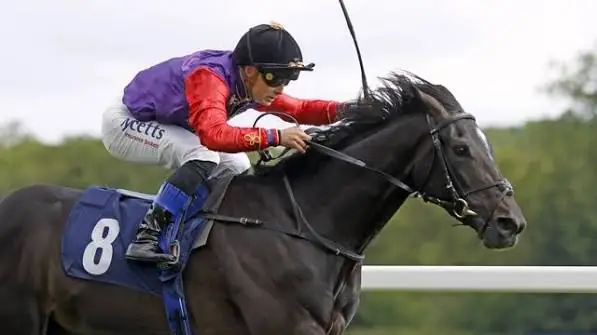
The $10 million Golden Eagle has completed one of the fastest rises in Australian racing history, earning Group 1 status just seven years after its launch. However, the decision also exposes the governance problems that forced an international body to step in and reshape the nation’s black-type program.
The Golden Eagle will be staged as a Group 1 for the first time during the 2026-27 season after its elevation was approved by the Asian Racing Federation’s Asian Pattern Committee.
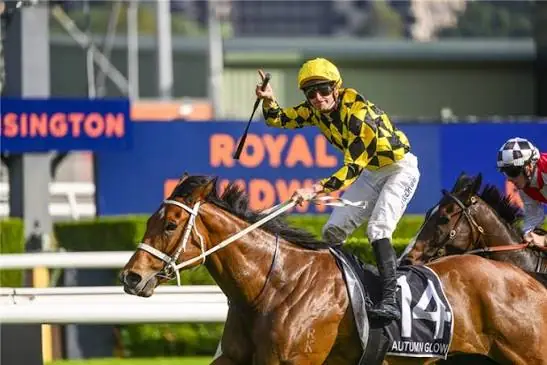
It is an extraordinary promotion for a race that was still classified as a non-black-type event when Autumn Glow won the 2025 edition.
Rather than progressing gradually through Listed, Group 3 and Group 2 company, the Golden Eagle has moved directly into the sport’s highest category. Its upgrade lifts the number of Australian Group 1 races to 77 for the new season.
MORE NEWS: Sheza Alibi Set for Memsie Stakes Return as Spring Plans Revealed
Golden Eagle Field Quality Earns Group 1 Recognition
The Golden Eagle was first run in 2019 and has quickly established itself as one of Australia’s most valuable and internationally attractive races.
Its honour roll includes Kolding, Colette, I’m Thunderstruck, I Wish I Win, Japanese visitor Obamburumai, British-trained Lake Forest and unbeaten mare Autumn Glow.
That consistent quality appears to have helped the race satisfy the ratings requirements considered by the Asian Pattern Committee.
The Asian Racing Federation said in an official statement that its handicappers held a special conference in June to determine end-of-season ratings for highly rated horses and the first four finishers in Group 1 races across its jurisdictions. Those figures were then considered when the committee assessed Australia’s applications for the 2026-27 season.
The Golden Eagle’s move from Rosehill to Royal Randwick in 2025 also placed it alongside Sydney’s other major spring events, strengthening its position within an increasingly valuable section of the Australian racing calendar. Racing NSW confirmed the move while continuing to promote the race as a $10 million international feature for four-year-olds.
Racing NSW Emerges as the Biggest Winner
The Golden Eagle headlines a long list of upgrades, with 22 of the 30 races elevated or granted stakes status coming from New South Wales.
The Invitation, 7 Stakes and Russell Balding Stakes have been introduced to the pattern at Group 2 level, while the Five Diamonds and The Gong will become Group 3 races.
The Big Dance, Golden Gift, Silver Eagle, The Hunter and The Beauford are among the races receiving Listed status for the first time.

Several established Sydney races have also been promoted. The Concorde Stakes, Kingston Town Stakes, City Tattersalls Club Lightning Stakes and Craven Plate will move from Group 3 to Group 2 level.
Victoria received several upgrades of its own, with the Poseidon Stakes, Cap D’Antibes Stakes, Spring Preview and Chautauqua Stakes all elevated from Listed to Group 3 company.
Victoria Derby Survives Group 1 Downgrade Threat
The review was not limited to promoting races.
The Victoria Derby, The Metropolitan and Railway Stakes had all been placed under consideration for possible downgrades but will retain their Group 1 status for the 2026-27 season.
The Victoria Derby decision will come as a major relief to breeders and traditionalists.
First run in 1855, the race carries enormous historical and breeding importance. Although the quality of some recent fields had led to concerns over whether it continued to meet international ratings benchmarks, the Asian Pattern Committee’s rules allow historical significance to be considered when assessing established races.
The Metropolitan and Railway Stakes have also survived for now, although being placed under formal consideration demonstrates that historic status alone may not permanently protect races if their performance standards fall.
Why Is an Asian Body Deciding Australian Race Status?
The most significant part of the announcement may be who made the decisions.
The Asian Racing Federation took temporary control of all Australian black-type classifications in December 2025 after the domestic system had failed to operate effectively for several years.
Racing.com previously reported that Australia had not maintained a properly functioning black-type quality-control system since as far back as the 2017-18 season. Disagreements between state racing authorities had prevented the Australian Pattern Committee from consistently assessing upgrades and downgrades.
In its latest statement, the Asian Racing Federation stressed that the arrangement is temporary and said Racing Australia must establish a functioning national system that complies with the Asian Pattern Committee’s rules.
“The ARF would like to reiterate that the APC making all decisions on Black Type races in Australia is intended only as a temporary measure,” the Asian Racing Federation said in its official statement.
Racing Australia was consulted on the provisional decisions and formally accepted them on July 9 before they were approved by the Asian Racing Federation Executive Council.
Why Group 1 Status Matters
A Group 1 upgrade is about considerably more than prestige.
It can increase the breeding and sale value of horses that win or place in the race, particularly mares and future stallion prospects. It also strengthens the Golden Eagle’s international reputation and gives overseas connections another reason to target Sydney during the spring.
The decision also validates Racing NSW’s strategy of using enormous prizemoney to quickly build new major events.
The Golden Eagle was rejected for Group 1 elevation by the Asian Pattern Committee in 2025, but Autumn Glow’s high-quality edition and the supporting ratings material submitted through Racing Australia helped produce a different outcome this time.
Traditionalists may still question whether a relatively young restricted-age race should hold the same classification as historic events that have shaped Australian breeding for generations.
However, the international pattern system is ultimately driven heavily by field quality and ratings.
On that measure, the Golden Eagle has assembled an honour roll few seven-year-old races could match.
A Landmark Result With a Warning Attached
The Golden Eagle’s promotion is a major victory for Racing NSW and confirmation that the race has become one of the most important events of the Australian spring.
Yet the wider announcement also carries a warning for the national industry.
Australia required international intervention because its own authorities could not maintain an effective and unified black-type system. Until that governance problem is properly resolved, future decisions about the status of the country’s most valuable races may continue to be made outside Australia.
The Golden Eagle has earned its place at the top.
Australian racing must now prove it can build a national system capable of protecting the credibility of that Group 1 label.
MORE NEWS: Craig Newitt Questions Racing Victoria After Son Barred From Jockeys’ Room