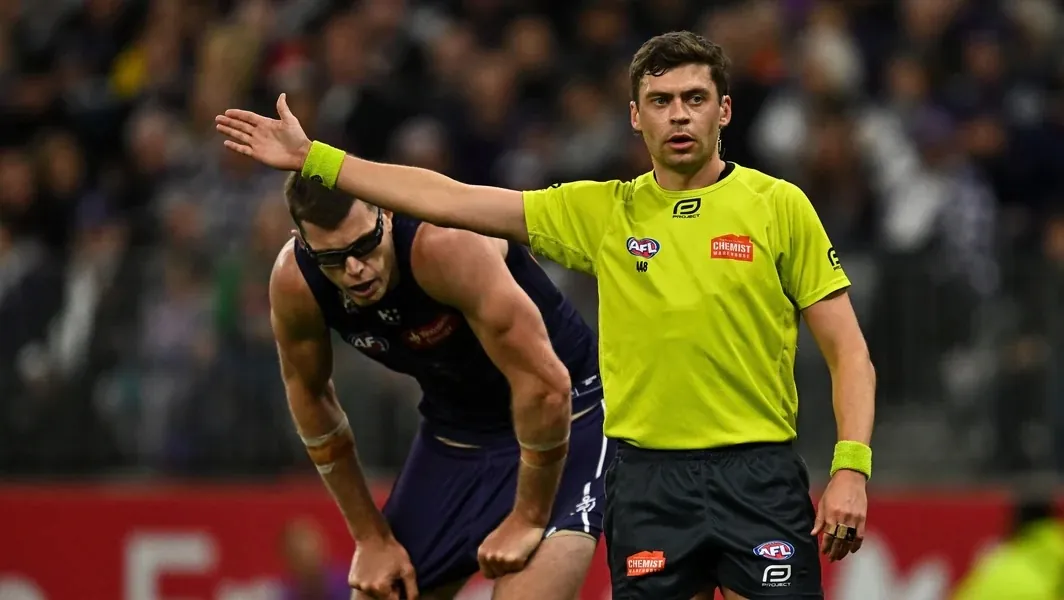
The AFL’s decision to fine rather than suspend Brayden Maynard and Touk Miller for making contact with umpires has triggered an extraordinary backlash—not from fans or coaches, but from the league’s own umpiring ranks.
According to multiple reports, AFL umpires have privately expressed frustration with the Match Review Officer’s handling of the incidents, arguing the current guidelines are “deficient” and failing to provide the protection officials have repeatedly asked for.
The controversy stems from Saturday night’s fiery clash between Collingwood and Gold Coast.
Following Ben Long’s heavy off-the-ball hit on Brayden Maynard, a major melee erupted with both Maynard and Suns captain Touk Miller making contact with umpire Nick Brown during the chaos. Both players escaped suspension, instead receiving $5,000 fines after the Match Review Officer determined the contact did not meet the threshold for intentional umpire contact.
That outcome has reportedly left many AFL umpires stunned.
According to the Herald Sun, several officials believe the sanctions send the wrong message, with some arguing any player who makes physical contact with an umpire during play should automatically face suspension rather than a financial penalty.
The frustration is understandable.
Only weeks ago, the AFL strengthened its stance on umpire contact, warning clubs that repeated offences could lead to substantial financial penalties and automatic tribunal referrals for serial offenders. The league has consistently stated that protecting umpires is a priority amid rising concerns over player-official contact across the competition.
MORE NEWS: Essendon Coaching Search: Has Dean Solomon Done Enough to Earn a Shot at the Bombers’ Top Job?
That is why many believe the Maynard and Miller decisions appear inconsistent.
If the AFL is publicly promoting a tougher approach while handing out fines in one of the season’s highest-profile incidents, it’s inevitable questions will be asked about where the line actually sits.
Former AFL umpire Ray Chamberlain was among those questioning the outcome, suggesting it would be difficult to explain why the contact warranted only a financial sanction given the league’s recent messaging around protecting officials.
To be fair to the Match Review Officer, context matters.

Both incidents occurred during a heated melee, with neither player appearing to deliberately target the umpire. The MRO ultimately determined the contact was careless rather than intentional—a distinction that proved crucial in avoiding suspensions.
But that hasn’t ended the debate.
Instead, it has highlighted what appears to be a disconnect between the AFL’s stated philosophy and the practical application of its rules.
The league has spent the past 18 months introducing tougher measures to reduce umpire contact, increasing fines, threatening club sanctions and warning repeat offenders of tribunal action. Yet one of the biggest umpire-contact incidents of the season has still resulted in players remaining available for selection the following week.
The AFL now finds itself in an uncomfortable position.
If umpires no longer have confidence in the system designed to protect them, the league may be forced to revisit its Match Review guidelines sooner rather than later.
Because this debate is no longer just about Brayden Maynard or Touk Miller.
It’s about whether everyone in the game understands exactly where the AFL stands on protecting its umpires.