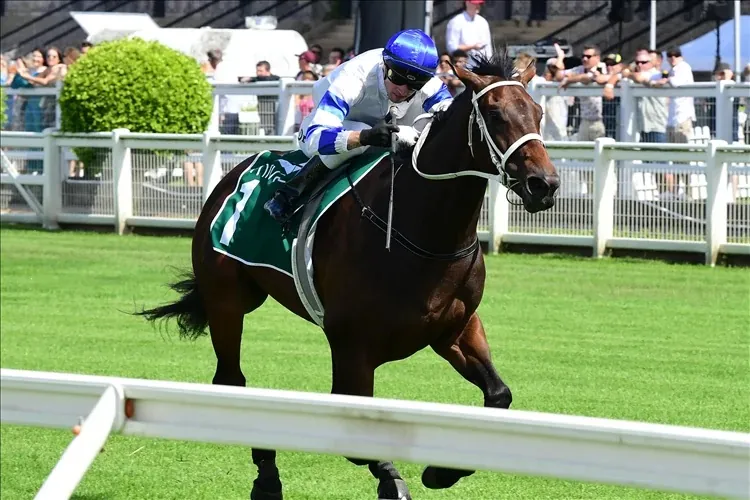
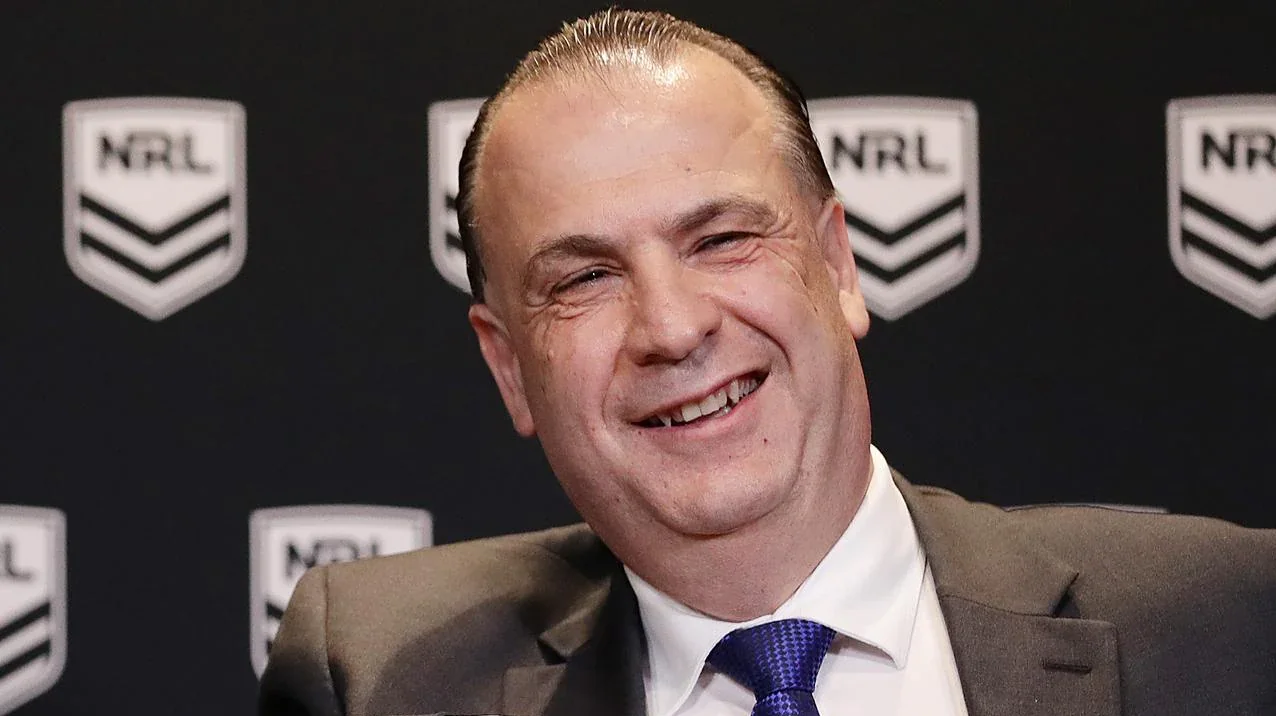
Peter V’landys and the PNG Chiefs want everyone to stop complaining about the enormous recruitment advantages being handed to the NRL’s newest franchise.
They argue the critics are short-sighted. They point to the difficulty of convincing players to relocate to Port Moresby. They remind clubs that they approved PNG’s admission and received millions in compensation.
But the critics are right about one fundamental point: the PNG Chiefs will not be operating on the same financial playing field as every other NRL club.
Brian To’o’s signing has dragged that uncomfortable reality back into the spotlight.
The four-time premiership winner will leave Penrith at the end of 2027 and join a Chiefs roster already containing Jarome Luai, Zac Lomax, Alex Johnston, Connor Watson and Matty Lees.
The signing was confirmed after being reported by Nine’s Wide World of Sports.
The Chiefs should be congratulated for assembling such a strong roster. They are simply using the rules and advantages provided to them.
The NRL, however, should stop pretending those advantages do not compromise competitive balance.
The salary cap is only equal on paper
Supporters of the PNG model repeatedly make the same argument: the Chiefs will operate under the same salary cap as every other NRL club.
Technically, that is correct.
Practically, it is misleading.
A player earning $1 million in Australia must pay Australian income tax. A player earning the same amount with the Chiefs could retain considerably more because of the tax exemptions attached to the PNG project.

Jarome Luai’s reported $1.2 million annual salary provides the clearest example.
In Australia, a substantial portion of that money would be lost to tax. Under the PNG arrangement, Luai could potentially retain close to the full contract amount, subject to his individual residency and taxation circumstances.
That means an Australian club may need to offer significantly more against its salary cap to provide the same net income.
The cap figure might look equal, but the purchasing power is not.
If one club can offer a player $1 million and place almost all of it in his pocket while another must offer substantially more to deliver the same result, those clubs are not competing equally.
No amount of administrative spin changes that calculation.
V’landys has promoted the advantage himself
V’landys has previously confirmed that revenue earned by players in PNG is intended to be tax-free, including qualifying third-party income.
“Any revenue they earn in PNG is tax-free,” V’landys said earlier this year.
“It’s like you’re doing a tax return in PNG, it’s all tax-free. Playing in PNG will set them up for life.”
That is not a minor incentive. It is an enormous recruitment weapon.
Third-party earning opportunities make the imbalance potentially even greater. A marquee player could combine a tax-advantaged Chiefs contract with commercial arrangements that generate additional income outside the salary cap, provided those deals satisfy NRL rules.
The Australian Government has moved to amend tax laws so the exemptions operate as intended. Budget papers reportedly estimated the change would reduce government receipts by $5.4 million across four years from 2026-27.
The advantage is therefore not imaginary, accidental or merely theoretical.
It has been deliberately created.
Clubs accepting $4 million does not make it fair
One response to the criticism is that existing clubs approved PNG’s entry and reportedly received $4 million each as part of the expansion process.
That does not settle the argument.
First, there have been reports that clubs were not fully aware of the eventual scope of the tax exemptions, particularly how they would interact with player contracts and third-party income.
Second, accepting an expansion payment does not permanently surrender a club’s right to question competitive integrity.
The money compensates clubs for admitting another franchise into the competition. It does not help them compete for individual players against tax-free contracts.
A one-off $4 million payment cannot be placed inside the salary cap to stop Brian To’o, Jarome Luai or the next superstar from leaving.
The compensation goes to the club. The recruitment advantage goes directly to the player.
Those are completely different things.
To’o proves this is no longer a hypothetical concern
When the tax concessions were first discussed, supporters argued that PNG would still struggle to attract elite players.
Port Moresby requires a major lifestyle change. Security concerns are genuine. Families would need to move away from established support networks, schools and professional opportunities in Australia.
Those challenges help explain why the Chiefs require assistance.
But the roster they are assembling proves the incentives may have moved beyond reasonable compensation.
To’o is not an unwanted veteran looking for one final contract. He is one of the best wingers of his generation and remains central to Penrith’s premiership ambitions.
At the time his signing was announced, he had scored 99 tries in 151 NRL appearances, played 17 Origins for New South Wales and won four premierships.
Luai is another four-time premiership winner and established representative playmaker. Lomax is an elite outside back. Watson is an Origin-calibre utility.
These are not players PNG reluctantly overpaid because nobody else would move.
They are players every club would want.
Chiefs football boss Michael Chammas previously labelled criticism of the tax arrangements “short-sighted”.
“I remember reading things six to 12 months ago where people were saying this team would be a rabble and it would fold,” Chammas said.
“Now we’re sitting here with Jarome Luai as our first signing, and the narrative has shifted to it being unfair.”
That narrative shifted because the evidence changed.
Concerns that PNG could not attract players have been answered. The Chiefs clearly can.
The new question is whether they have now been given more assistance than necessary.
Penrith will feel the imbalance first
Penrith is particularly vulnerable because several of its most important players come off contract at the end of 2027.
To’o is already gone. Nathan Cleary, Isaah Yeo and Liam Martin also face major decisions about their futures.
The Chiefs will not sign all of them, but Australian clubs cannot match PNG’s tax position dollar for dollar without sacrificing substantially more salary-cap space.
Penrith built its players through one of the NRL’s strongest development systems. It invested years in junior pathways, coaching and cultural standards.
The reward for that work should not be watching an expansion franchise use government-backed tax advantages to assemble a ready-made premiership core.
Player movement is an essential part of a salary-capped competition. Penrith cannot keep everyone, nor should it be allowed to.
But players leaving because another club offers a larger role or sacrifices more of its cap is different from leaving because one jurisdiction allows identical contracts to deliver dramatically different take-home pay.
Perth has every right to be furious
The comparison with the Perth Bears makes the imbalance even harder to defend.
Perth enters the NRL in 2027 and faces many of the same recruitment challenges. Players must relocate across the country, move their families and leave established support networks.
Housing costs, travel demands and the absence of an existing NRL roster make the Bears’ task extremely difficult.
Yet Perth does not possess the same tax-free recruitment weapon.
The Bears must attract players while operating under conventional Australian tax laws. If they need to pay a relocation premium, that money still counts against their salary cap.
PNG can offer a lifestyle change, an historic opportunity, government-backed facilities and significantly greater net earnings.
That is not a small concession. It is a completely different recruitment market.
The secure village adds another layer of public support
The PNG project is also supported by a major government-funded infrastructure program.
Plans have included a secure residential village and high-performance facilities designed to house players, staff and their families in Port Moresby.
Those measures are understandable given legitimate security concerns. The NRL could not responsibly ask players to relocate without appropriate housing and protection.
However, they form part of a wider package reportedly supported by hundreds of millions of dollars in Australian and PNG government funding.
Again, that does not make the Chiefs responsible for the imbalance. The club would be foolish not to use every resource available.
But it does make comparisons with ordinary NRL clubs increasingly difficult.
Other teams must fund facilities, player services and football operations through conventional commercial arrangements. PNG is entering with extraordinary public backing because the project carries diplomatic as well as sporting importance.
That may be good foreign policy. It does not automatically make it good competition policy.
The solution is not removing all assistance
PNG needs concessions.
Pretending otherwise would be equally unreasonable.
The Chiefs are asking players and their families to relocate to a different country with genuine logistical, security and lifestyle challenges. Some form of additional assistance is necessary to create a functional team.
The solution should be targeted compensation rather than an unrestricted recruitment advantage.
The NRL could consider:
- A standard relocation allowance available outside the salary cap.
- Education, housing and security support for players’ families.
- Limited marquee-player concessions during the club’s first seasons.
- A net-income equalisation mechanism when calculating PNG contracts.
- Regular independent reviews of the tax advantage.
- A clear expiry date for every expansion concession.
- Equivalent establishment assistance for Perth where appropriate.
The goal should be helping PNG overcome relocation barriers—not allowing it to purchase substantially more talent with the same nominal salary cap.
Wanting PNG to succeed does not require ignoring the problem
A successful PNG club would be enormous for rugby league.
Papua New Guinea is one of the few countries where rugby league is genuinely the national sport. A competitive NRL team could transform local pathways, inspire young players and strengthen the game throughout the Pacific.
That is precisely why the project deserves transparent rules.
If the Chiefs win quickly, supporters should be able to celebrate their recruitment, coaching and development—not wonder whether the competition was tilted in their favour before they played their first match.
V’landys is correct that PNG needs support. He is correct that the club’s success could benefit the entire sport.
But critics are also correct that tax-free salaries create an advantage no Australian club can genuinely match.
Both things can be true.
The Chiefs should be given enough help to compete. They should not be given so much help that everyone else is merely pretending the cap is equal.
MORE NRL NEWS: View Our NRL News Here