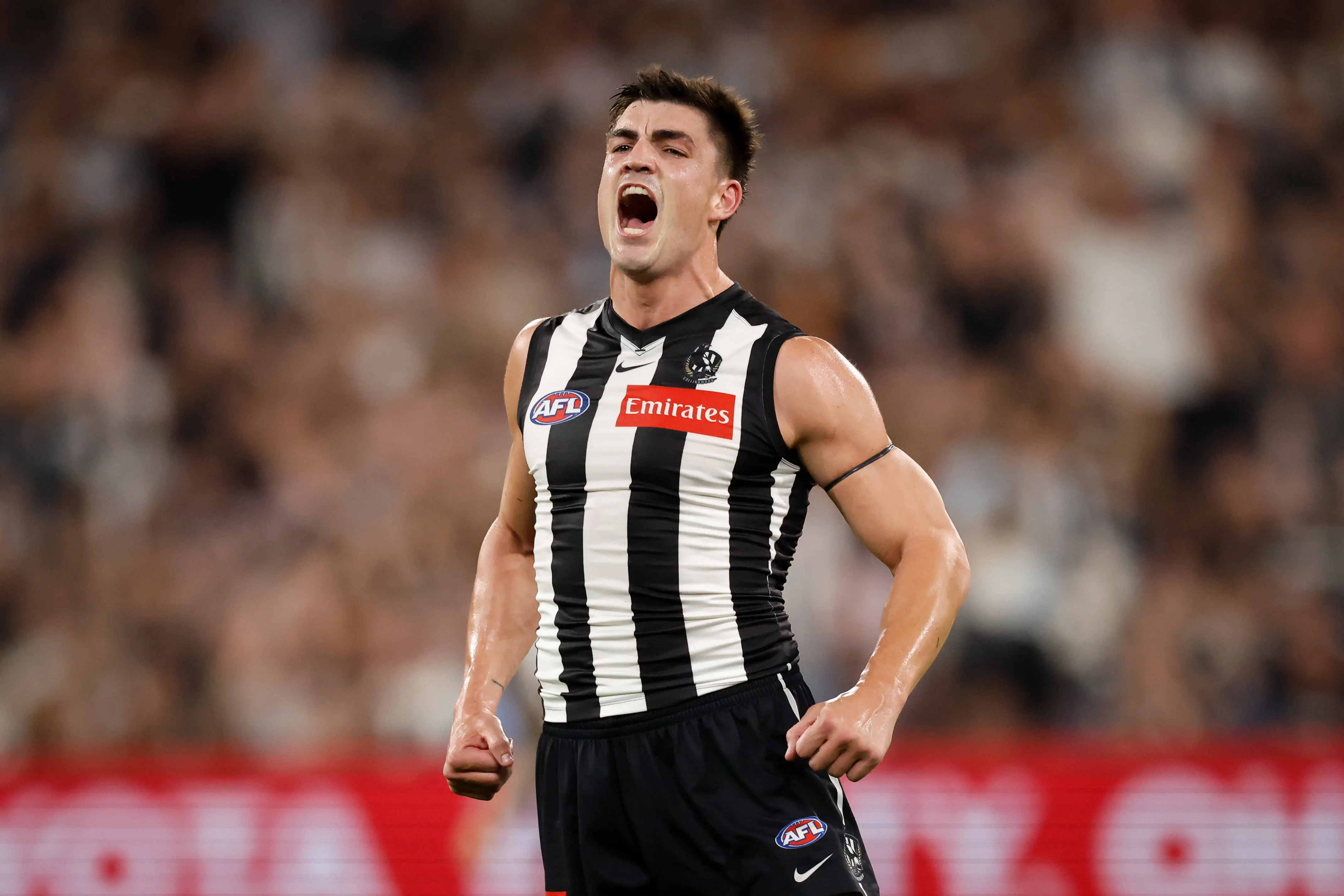
Brayden Maynard has built a reputation as one of the AFL’s toughest competitors, but his latest moment of frustration may prove to be one of the most costly of his career. In a split second, the Collingwood defender went from victim to potential villain after making contact with an umpire during a fiery melee against Gold Coast.
The flashpoint came just before halftime after Suns forward Ben Long collected Maynard with an off-the-ball shot to the ribs, sparking an all-in scuffle between both teams. As players rushed in, Maynard charged towards Long but appeared to push umpire Andrew Stephens in the back while trying to reach his opponent.
There’s little doubt Maynard had every reason to be furious.
He had just copped a heavy off-the-ball hit that left him clutching his ribs and fearing he may have suffered a serious injury. Even Collingwood coach Craig McRae later criticised the incident, questioning why Long had targeted his vice-captain away from the contest.
MORE NEWS: Essendon Coaching Search: Has Dean Solomon Done Enough to Earn a Shot at the Bombers’ Top Job?
But anger is never an excuse for making contact with an umpire.
That’s where Maynard let himself down.
Whether the contact was deliberate or accidental will ultimately determine how the AFL views the incident. Under the league’s Match Review guidelines, intentional or aggressive contact with an umpire can be referred directly to the Tribunal, while lesser incidents are generally dealt with by way of financial sanctions.
The AFL has spent years trying to stamp out umpire contact.
The league has repeatedly stressed that officials must be protected at all costs, regardless of the circumstances. Even incidental contact has attracted scrutiny in recent seasons, while deliberate contact has resulted in significant suspensions.
That means Maynard may have handed the Match Review Officer an unnecessary headache.
Many commentators have defended the Collingwood defender, arguing he was reacting instinctively after being blindsided by Long’s cheap shot. Others believe players simply have to remain aware of where umpires are positioned, particularly during heated confrontations.
The irony is that Maynard was initially the player deserving sympathy.
Instead of the post-match discussion focusing solely on Long’s hit, attention has shifted almost entirely to whether Maynard crossed the line by making contact with an official.
It’s a reminder of just how quickly momentum can change in elite sport.
One emotional reaction has overshadowed the incident that caused it.
Maynard has earned enormous respect throughout his career for the fearless way he attacks every contest. That competitiveness is one of the reasons Collingwood values him so highly.
But sometimes the toughest players also need to show the greatest restraint.
This time, Maynard didn’t.
Now he faces an anxious wait to discover whether one moment of frustration will cost him more than just a fine.